

 It’s hard to know who suffers most when a little one is sick, the baby or the mother. Babies whose noses are all congested so they struggle to breathe are especially pitiful.
Thank goodness today we have some excellent nasal aspirators that can help them breathe better fast.
Sure, using them can be a little yucky, but as a mom, you’ll get over that in a flash if you can make your child more comfortable.
Babies can’t blow their noses. That’s why doctors sometimes recommend that you use a nasal aspirator to give them some relief.
Of course, you’ll want to follow instructions carefully and refrain from using the aspirator too often, for fear of irritating the delicate membranes in baby’s nose.
Nasal aspirators come in four basic styles. We’ll be looking at the advantages and disadvantages of each type. Then we’ll look at the best nasal aspirator models and give you the pros and cons of each.
Our Top Picks
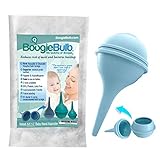
- Dishwasher Safe. The BoogieBulb Baby Nasal Aspirator comes apart for cleaning and can be sterilized in the dishwasher or boiled to clean.
- Hospital Grade. This aspirator is large enough to have good suction and is similar to those used in hospitals.
- No Toxins. The aspirator is made with no latex, BPA or phthalates.
- Sized for Your Baby. This device comes in three sizes, so you can find the one that is a good fit for your baby.
- Guaranteed. The manufacturer offers a money-back guarantee.
- Economical. Bulb aspirators are the cheapest type. This one costs more than the one-piece models but is still reasonable.
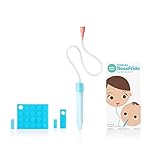
- Effective. Most moms were happy with the amount of mucus removed by the NoseFrida.
- Non-invasive. The tip of the NoseFrida is pressed against baby's nose but does not go inside the nose.
- No Toxins. The aspirator is free of BPA and phthalates.
- Economical. This aspirator costs only a little more than the bulb-type aspirators.
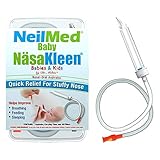
- Silicone Tip. The NäsaKleen nasal aspirator comes with a soft silicone tip.
- No Toxins. The aspirator is free of BPA, latex and phthalates.
- Easy to Clean. The company website recommends washing with soap and water.
- Case Included. It comes with a case for storage and travel.
- Effective. Most moms were happy with the suction they got with the NäsaKleen.
- Economical. This aspirator is one of the cheapest devices of this type.
- Dishwasher Safe. The BoogieBulb Baby Nasal Aspirator comes apart for cleaning and can be sterilized in the dishwasher or boiled to clean.
- Hospital Grade. This aspirator is large enough to have good suction and is similar to those used in hospitals.
- No Toxins. The aspirator is made with no latex, BPA or phthalates.
- Sized for Your Baby. This device comes in three sizes, so you can find the one that is a good fit for your baby.
- Guaranteed. The manufacturer offers a money-back guarantee.
- Economical. Bulb aspirators are the cheapest type. This one costs more than the one-piece models but is still reasonable.
- Effective. Most moms were happy with the amount of mucus removed by the NoseFrida.
- Non-invasive. The tip of the NoseFrida is pressed against baby's nose but does not go inside the nose.
- No Toxins. The aspirator is free of BPA and phthalates.
- Economical. This aspirator costs only a little more than the bulb-type aspirators.
- Silicone Tip. The NäsaKleen nasal aspirator comes with a soft silicone tip.
- No Toxins. The aspirator is free of BPA, latex and phthalates.
- Easy to Clean. The company website recommends washing with soap and water.
- Case Included. It comes with a case for storage and travel.
- Effective. Most moms were happy with the suction they got with the NäsaKleen.
- Economical. This aspirator is one of the cheapest devices of this type.
*All product links in this article will take you to the latest prices on Amazon.com, scroll down for our in-depth reviews below.
Why Babies Get Congested
First, moms should know that what sounds like stuffiness to us can be business as usual for a newborn. Babies have small nasal passages, and they automatically breathe through their noses rather than through their mouths.
They can make a bit of noise and sound congested when they really aren’t. These kinds of sounds aren’t a reason to use a nasal aspirator.
On the other hand, when you can hear the mucus rattling around in your baby’s nose and baby clearly would breathe more easily if you could get it out, you may want to use a nasal aspirator.
Most experts recommend using them before feeding, so baby can nurse more efficiently, and before sleep.
If you decide that the use of a nasal aspirator is appropriate, you should still exercise caution. Don’t use the aspirator too often, and don’t suck too vigorously.
Baby’s nasal membranes are thin and can be damaged, causing swelling or a nose bleed. If the membranes swell after you have used an aspirator, you have actually made the problem worse, not better.
When Baby Has a Cold
Your baby’s symptoms can be eased with an aspirator whether the mucus is caused by a cold, an infection or an allergy. Still, it can be helpful to know which one is likely to blame.
If your baby has a cold, it will probably run its course in seven to ten days, doctors say. Most children don’t need cold or cough medicine, according to the latest recommendations from the U.S. Food and Drug Administration. Also, at some point during that time, baby’s mucus will change in color and consistency.
It’s a myth that a thick, yellow or greenish mucus indicates an infection. Sometimes the change just indicates that your baby’s cold is running its course.
If the yellow or green mucus appears only in the morning, or only for a day or two, it’s nothing to worry about. If it persists longer or is present around the clock, you might want to call your doctor.
Learn more about the meaning of mucus colors from LiveWell. Learn more about children and colds from HealthyChildren.com, sponsored by the American Academy of Pediatrics.
What About Allergies and Infections?
If your baby’s symptoms are due to allergies, the runny nose can last for 14 days or more with no changes in color or consistency. Usually, the mucus will be thin and watery and won’t cause parents to reach for the aspirator.
Occasionally a baby has neither a cold nor allergies but a respiratory infection caused by bacteria. Usually, this occurs as a secondary infection when baby’s respiratory system is already irritated by a cold or allergies.
Cold-like symptoms that progress to include fever and wheezing can be due to respiratory syncytial virus, or RSV. Almost all babies have had RSV by the time they turn two, and most cases clear up within a week or two.
If your baby has trouble breathing that goes beyond the usually snotty nose, check with your doctor, especially if your child is unusually irritable or lethargic.
Three Kinds of Aspirators
Nasal aspirators come in four basic types. From low-tech to high tech, they are:
Bulb Type. This aspirator is simply a squeezable bulb that you use to suck out baby’s nostrils. This type has been around for decades. Many hospitals send babies home with a basic bulb aspirator. Some manufacturers of bulb aspirators have adapted the fundamental design to make their devices more sanitary and more useful.
Oral Suction Type. This kind is powered by mom. One end goes in baby’s nose. The other end goes into mom’s mouth. Mom provides the suction. Usually, a filter is used to keep mucus from making its way to the mother’s mouth.
Battery Operated Type. This aspirator is hand-held and provides gentle sucking action. It’s a good option for those who want more than a bulb but who are put off by the idea of sucking on an aspirator.
Electric Unit. This aspirator runs on electricity and is quite a bit more expensive than any of the other aspirator choices. If your baby only suffers from occasional stuffiness, a electric aspirator probably isn’t necessary.
For babies with chronic conditions, this type of unit can be a lifesaver. Ask your doctor if an electric unit would be helpful in your baby’s situation.
How to Use a Baby Nasal Aspirator
When you purchase an aspirator, read the directions carefully. Most models suggest that you use saline spray to soften up the mucus before you extract it.
You can do the same thing by using some steam or a cool-mist vaporizer/humidifier, or by using the aspirator after baby’s bath.
If you are using a bulb type aspirator, squeeze the bulb before you put it in baby’s nose, then slowly release the pressure to draw the mucus out.
Take the bulb tip out and wipe it, then do the other nostril. Never press on the bulb when the tip is in baby’s nostril, because forcing air up the nose and into the nasal cavities could cause problems.
Other types of aspirators are more complex, and you will need to read the directions carefully. Always start with gentle suction.
Always follow the instructions for cleaning the aspirator. Try not to use the saline solution and the suction for too many days in a row, as the process can be irritating if used too often or for too many days.
Never use an aspirator after baby has had a nosebleed or if the nasal membranes are cracked, dry and seeping blood.
In other news, your baby will not enjoy this process. Be prepared for a startle and possibly some screaming. Baby’s reaction will probably be short-lived, however.
With young babies, it may help to swaddle them ahead of time. Bigger babies sometimes recognize the aspirator and fight. In this case, it may take two people to handle the baby and get a quick, efficient suction.
On the other hand, some bigger babies learn to enjoy the process. It may help to let them pretend to suction their stuffed animals or a doll.
Let’s take a look at some baby nasal aspirators. We’ll start with the low-tech bulb type and move on to the more sophisticated models.
Most moms also like to know about the makers of products for their babies, so we have included information about manufacturers when it is available.
Best Nasal Aspirators
BoogieBulb Baby Nasal Aspirator


Moms will need a little practice to take this device apart and put it back together efficiently. Also, you will need to experiment a bit with how to squeeze it so that the seams don’t pop open. It should stay together if you push from the bottom with your thumb.
Cons: Headquartered in Texas, Innovo is a small, privately owned manufacturer of medical products. According to the company website, customer feedback is the “backbone” of their business. Coupons are sometimes available on the company website. Cons: The tip can be removed for somewhat easier cleaning, although you will not be able to clean it as thoroughly as the ones that come apart at the middle. The main benefit of this design is that it does not have to be squeezed from the bottom, as the two-piece models do. The size and shape allow you to easily use it with one hand. The product supposedly has a money-back, satisfaction-guaranteed warranty. The company does not appear to have a website. It does have a Facebook page. Cons: Hirschhorn saw an untapped market for products that help parents deal with the yuckier aspects of parenting. She grew the brand with clever slogans like, “Calm the Fuss Down.” Soon moms were making YouTube videos of themselves using the NoseFrida on their babies – and the rest is nasal aspirator history. The NoseFrida package says that the product is Swedish and that it was invented by a doctor. It’s a simple design consisting of a large tube connected to a piece of thin rubber tubing. The large tube has a tip that is pressed against baby’s nostril. The mom sucks on the thin tubing. A filter keeps the mom from being exposed to any of the yucky stuff that comes out of baby’s nose. The NoseFrida website says the hygienic filter also prevents bacteria from traveling up the tube from baby to mom. After each use, the filter is removed. The large tube is washed with soap and water, and the small tube is cleaned with rubbing alcohol. Then it is reassembled with a new filter for the next use. The tube, mouthpiece and filter holder can also be sterilized in the dishwasher. Cons: The two aspirators are similar in basic design, but the Boogie Buster has more safeguards to keep the mom being contaminated by baby’s germs. Some moms, however, felt that the extra barriers between baby and mom made it hard to achieve enough suction. Also, the Boogie Buster has a shorter tube, and many users felt that the tube was too short for easy use. Cons: BabyComfy has an ingenious solution to the problem. An ordinary household tissue serves as a filter in the BabyComfy Nasal Aspirator. BabyComfyCare is based in Colorado. The nasal aspirator was designed by an engineer who is also a father. Cons: The tube that mom sucks on enters the chamber on the side, and this small change in angle makes it easier for mom to suction baby, according to some users. You can easily use the aspirator while you are holding your child. The Bubzi Co nasal aspirator has a soft silicone tip with a ridge that prevents the tip going too far up baby’s nose. Like the Baby Comfy, the Bubzi Co model has no built in filter, but the company does recommend using a tissue as a filter if desired. When used without the filter, there is definitely the possibility of getting mucus in mom’s mouth, especially if baby’s secretions are thin and runny. The company’s website says that running water is enough to clean the aspirator, but it can also be cleaned in the dishwasher or other sterilizing devices.
Innovo Twister Bulb

Nose Cleaner Mucus Suction for Babies

NoseFrida Nasal Aspirator

Ulubulu Original Boogie Buster

BabyComfy Nasal Aspirator

Bubzi Co Baby Nasal Aspirator


